Every waste consumes resources
In Lean, waste is any activity that consumes resources without adding value for the customer. Resources are money, time, material, energy and water. So every waste has an environmental side.
A scrapped part consumed raw material, process energy and transport, and it still becomes waste. The connection is direct, which is why lean improvement programs tend to bring environmental gains even when that was not the main goal.
This is not green marketing either. It is about applying the same critical eye to waste, now also measuring liters, kilowatts and kilograms. We will not cite gain figures here: every plant is a different reality, and the effects depend on the baseline, the process and measurement discipline.
How the 7 wastes become environmental losses
| Waste | Associated environmental loss |
|---|---|
| Overproduction | Raw material and energy spent on parts with no demand, which become inventory or scrap |
| Waiting | Equipment running without producing, with idle energy consumption |
| Transportation | Fuel and emissions from unnecessary internal and external movements |
| Over-processing | Steps and inputs beyond what is needed, such as more machining, more chemicals and more energy |
| Inventory | Material that expires, deteriorates or becomes obsolete, plus more climate-controlled and lit space |
| Motion | Less direct, but it leads to larger layouts, with more lighting and climate control |
| Defects | Scrap and rework: lost material, doubled energy and generated waste |
See the full list of wastes in the 7 wastes of Lean.
Energy and water
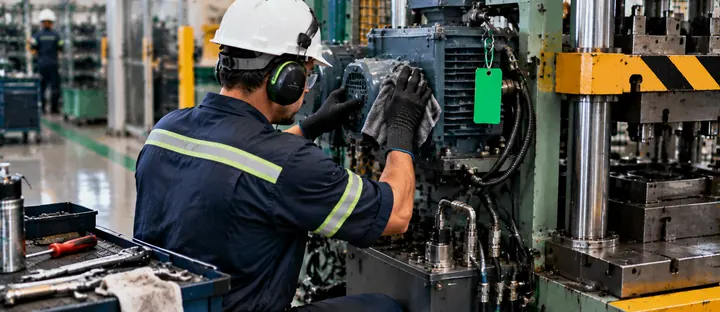
Equipment that is stopped but still on, leaking compressed air and furnaces heated without a load are waste of waiting and of processing. OEE helps you see the stoppages, and TPM addresses leaks and failures at the source.
Water follows the same logic: excessive washing, leaks and a poorly tuned process. Meters by area and the habit of going to the place, as in the gemba walk, show where the loss is.
- Measure consumption by area and by shift, not just the plant total.
- Compare consumption with production to find idle consumption.
- Treat leaks as a maintenance defect, with an owner and a deadline.
Scrap, rework and packaging
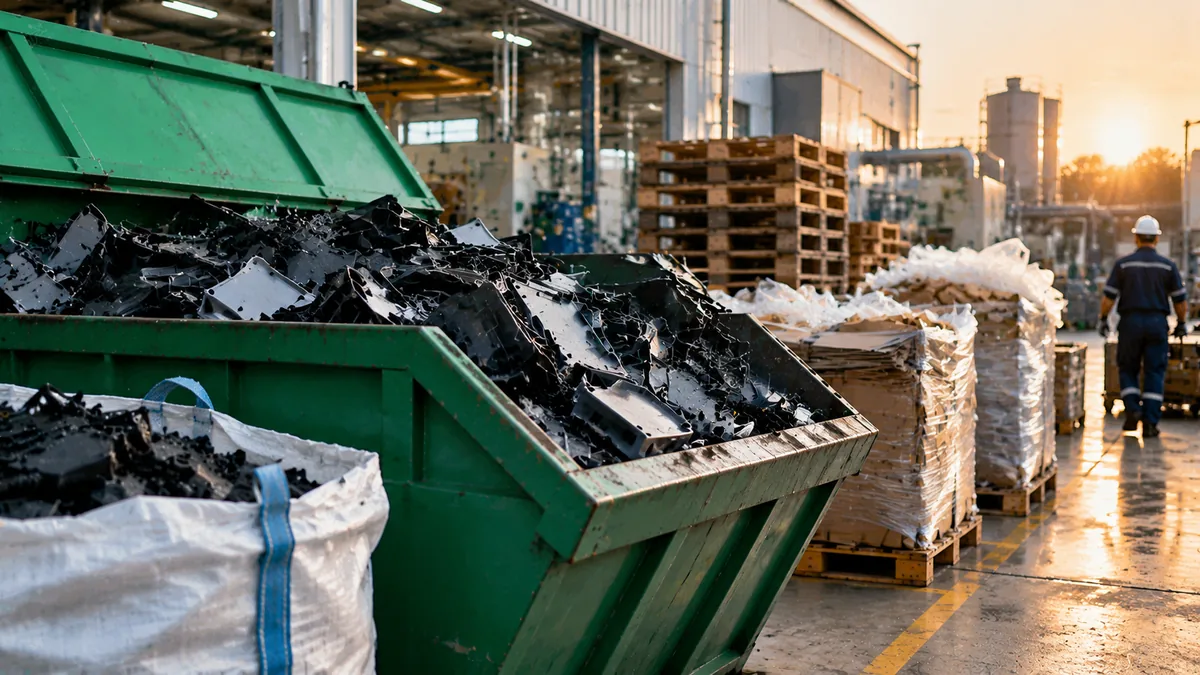
The defect is the waste with the greatest direct environmental effect. Every scrapped part was produced twice. When the defect is detected only at the end of the line, all the consumption of the earlier steps was in vain. Reducing defects, with poka-yoke and jidoka, reduces waste and consumption at the same time.
Packaging appears on two fronts: what arrives with the inputs and what leaves with the product. Returnable packaging, sized for the flow, reduces disposal. Excess protection added because of quality or transport failures is also a form of over-processing waste.
Transportation and layout
Long distances between processes require forklifts, routes and time. A flow layout, such as a cellular arrangement, brings the steps closer together and cuts movements. Value stream mapping (VSM) shows the path of the material from supplier to customer.
In external transport, smaller and more frequent lots may require more trips. It is worth evaluating the whole picture: consolidating loads and planning routes keeps inventory reduction from turning into higher emissions.
Lean actions with environmental gains
- 5S and visual management: reduces material losses and makes leaks and expiry dates easier to see.
- TPM: fewer failures, less scrap and less idle consumption.
- SMED: quick changeovers allow smaller lots and less leftover material.
- Pull production: produces what is demanded and avoids obsolete inventory.
- Standardization: reduces variation, defects and rework.
In all of them, the principle is the same: eliminate what does not add value. For pull production techniques, see kanban.
Limits and precautions
Lean and sustainability converge, but they are not identical. A lean action can worsen an environmental indicator, such as small, frequent deliveries that increase trips. Measure the environmental effect together with the operational one.
The United States Environmental Protection Agency (EPA) published the guide The Lean and Environment Toolkit, which links lean methods to opportunities for reducing environmental impact. The Lean Enterprise Institute (LEI) lexicon also covers the concept of waste, the basis of this relationship. Both are listed in the sources at the end.
Another precaution is about language: do not promise management a percentage gain before measuring. Establish the baseline, choose a few indicators per unit produced and review every quarter. Real environmental gains show up in the data, not in the slides.
Next step
Choose a line and, on your next gemba walk, add an environmental reading: where equipment is running without producing, scrap on the floor, discarded packaging and audible leaks. Turn each finding into an action with an owner and a deadline, and prioritize the low-cost, quick-return ones, which help build support for the bigger ones. Measure consumption before and after to confirm the gain.
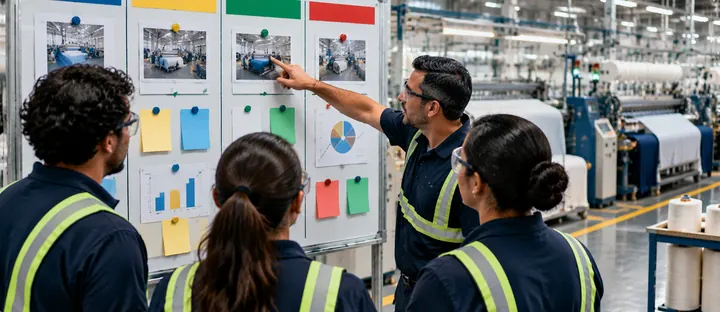
If the company already uses visual management boards, add an indicator of consumption per unit produced. Seeing the curve week by week motivates the team and quickly reveals when a problem has come back. That way sustainability stops being a side project and becomes part of the improvement routine.
Frequently asked questions
Is there a relationship between Lean and sustainability?
Yes. Waste in Lean is resource consumption without value, and wasted resources are also environmental losses, such as energy, material and water.
Which waste has the greatest environmental impact?
It depends on the process, but defects and overproduction tend to weigh heavily, since they waste the material and energy of whole parts.
Does reducing inventory help the environment?
Generally yes, since it reduces losses from expiry and obsolescence. But small lots can increase transport trips, so the whole picture needs to be evaluated.
Which lean tool helps reduce energy consumption?
TPM and OEE help eliminate stoppages and leaks. Observation at the gemba shows equipment running without producing.
Where can I find official material on the topic?
The EPA's guide The Lean and Environment Toolkit and the Lean Enterprise Institute lexicon.
Keep learning
Sources
- U.S. Environmental Protection Agency (EPA). The Lean and Environment Toolkit.
- WOMACK, J.; JONES, D. A Mentalidade Enxuta nas Empresas. Rio de Janeiro: Elsevier.
- Lean Enterprise Institute. Lean Lexicon: Waste. https://www.lean.org/lexicon-terms/waste/
- Lean Enterprise Institute. Lean Lexicon: Seven Wastes. https://www.lean.org/lexicon-terms/seven-wastes/
Lean for leaders
Download the free e-book and see how leaders sustain continuous improvement and Lean culture.
Download the e-book
About the author
Lean Manufacturing & Behavioral Management Specialist
Over 20 years in the automotive and metalworking industries (GM and Dana), Lean Manufacturing practitioner since 2006. SENAI instructor and mentor in Brazil’s Brasil Mais Produtivo program, delivering consulting, training and audits for 50+ companies, combining quality, productivity and people development.