The difference in one sentence
Industry 4.0 asks what technology can connect and automate. Industry 5.0 asks who and what that technology works for. The first deals with sensors, data, and integrated systems. The second puts people, the environment, and the ability to withstand crises back at the center of decisions.
It helps to separate three layers when reading any proposal: the technology (what gets installed), the process (how the work flows), and the intent (what you want to protect). 4.0 tends to be strong on the first layer. 5.0 draws attention to the third, and Lean is usually what takes care of the second.
This is not a version that revokes the previous one. Industry 5.0 presupposes the digital base of 4.0 and adds selection criteria. If you have not yet mastered the first, it is worth starting with Industry 4.0 on the factory floor.
Table of differences
The comparison below summarizes the two visions. The terms are conceptual guidelines, not technical standards, and each company interprets them in its own context.
| Criterion | Industry 4.0 | Industry 5.0 |
|---|---|---|
| Central question | What can we connect and automate? | How does technology serve people and society? |
| Main focus | Efficiency, productivity, and data integration | Well-being, sustainability, and resilience |
| Role of the operator | Monitored and, often, replaced in repetitive tasks | Skilled collaborator, with autonomy and a voice in the process |
| Robotics | Automation for economies of scale | Collaborative robots that extend human capability |
| Product | Flexible, connected production | Customization with low waste |
| Environment | A possible consequence of efficiency | A design criterion from the start |
| Risk addressed | Equipment and process failure | Supply chain disruption, crisis, and loss of talent |
Where each concept comes from
The term Industry 4.0 spread from Germany in the early 2010s to describe the connected factory: cyber-physical systems, the Internet of Things, and real-time data analytics.
Industry 5.0 gained prominence when the European Commission began promoting the concept in 2021 as a complement to the earlier vision. The central message is an industry that is human-centric, sustainable, and resilient. It is a policy and strategy orientation, not a standard that can be certified.
For that reason, be wary of anyone selling Industry 5.0 as a ready-made product. It works better as a decision lens: before buying a technology, ask what it does to people, to resources, and to business continuity.
People at the center
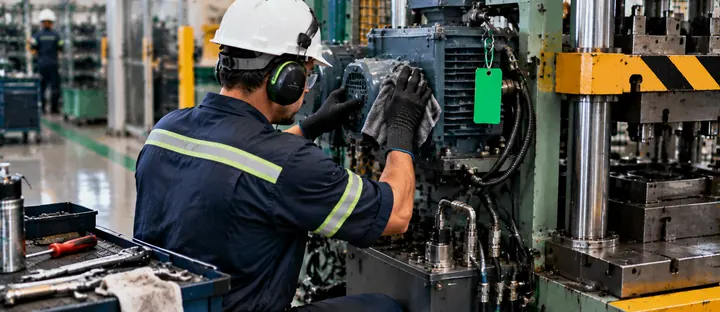
In the narrower 4.0 reading, the person appears as a cost to be reduced. In 5.0, the person is the source of judgment, creativity, and problem solving, which are exactly what machines do poorly. Technology takes over repetitive effort, physical risk, and data collection. The person keeps the decision-making and the improvement.
This speaks directly to the respect-for-people pillar of the Toyota Production System. An operator who understands the process and is listened to sees waste that no sensor detects.
Sustainability and resilience
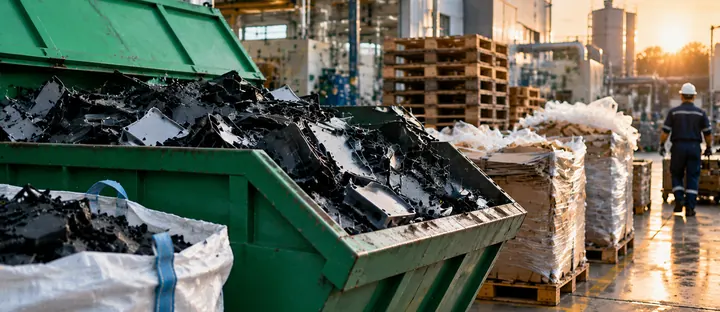
Sustainability, here, means designing the process to consume less energy, less material, and generate less scrap. It is the same reasoning as the seven wastes, extended to environmental impact.
Resilience is the ability to absorb a shock and keep delivering: a shortage of inputs, a supplier shutdown, a sudden change in demand. A supply chain optimized only for cost tends to be fragile. A resilient chain accepts some planned slack and alternative sources of supply.
Impact on the factory floor
Illustrative scenario: in a manual assembly cell with heavy parts, the narrower 4.0 view tends to measure the operator's cycle and demand pace. The 5.0 view first asks whether the lifting can be done by an assist device, whether the workstation forces a bad posture, and whether the operator can suggest changes. The productivity gain comes as a consequence of a well-designed workstation, not as an imposed target.
In practice, the difference shows up in day-to-day decisions:
- Workstation design: ergonomics and safety come before automation, not after the accident.
- Interface: dashboards and alerts are designed so the operator can understand and act, not just so the manager can monitor.
- Skills: continuous training to operate, adjust, and improve collaborative systems.
- Data: the operator has access to the indicators of their own workstation, which reinforces visual management.
- Maintenance: sensors support TPM, but the care routine stays with the people who operate.
Common interpretation mistakes
The first mistake is treating 5.0 as the next technology purchase. Without a stable process, any new system just accelerates chaos. The second is using human-centered language as a veneer while the workstation remains poorly designed. The third is ignoring sustainability until it becomes a customer or regulatory requirement.
A simple test helps. For each initiative, answer: did someone's work become safer, more meaningful, or more skilled? Does the process use fewer resources per good unit? Does the operation withstand an interruption better? Three positive answers indicate alignment with the 5.0 vision.
Next step
Choose one line and run a short diagnosis on three axes: what is digitalized, where the operator loses time or is exposed to risk, and where the process wastes energy and material. List three improvements that address all three axes at once. Start with the cheapest, measure the result, and only then evaluate new technology. The foundation remains kaizen with the participation of the people who do the work.
Frequently asked questions
Does Industry 5.0 replace Industry 4.0?
No. It builds on the digital base of 4.0 and adds selection criteria: people, sustainability, and resilience.
Who popularized the concept of Industry 5.0?
The European Commission promoted the concept in 2021 as a vision of a human-centric, sustainable, and resilient industry.
Is Industry 5.0 a standard or a certification?
No. It is a strategic and policy orientation, with no auditable requirements of its own.
What changes for the operator?
The operator stops being just an executor or a monitored item and starts working with collaborative technology, with more autonomy and skills.
Do I need to finish Industry 4.0 before thinking about 5.0?
You do not need to finish it, but you need a stable process and reliable data. The 5.0 criteria can guide your choices from the start.
Keep studying
Sources
- LIKER, J. O Modelo Toyota. Porto Alegre: Bookman.
- Lean Enterprise Institute. Toyota Production System (glossário Lean). https://www.lean.org/lexicon-terms/toyota-production-system/
- Lean Enterprise Institute. Waste (glossário Lean). https://www.lean.org/lexicon-terms/waste/
- WOMACK, J.; JONES, D. A Mentalidade Enxuta nas Empresas. Rio de Janeiro: Elsevier.
Keep studying: trusted sources and links
- Plattform Industrie 4.0
- SENAI: educação profissional e tecnológica para a indústria (in Portuguese)
- Wikipedia: Fourth Industrial Revolution
Save this address: Manufatura Enxuta is your school for lean manufacturing. Come back whenever you need to study, with a complete article, a visual map and trusted sources. Follow one of the learning paths or check the A–Z glossary.
Want to lead change with a method?
Download the free e-book Lean for Leaders and see how to sustain a lean culture day to day.
Download the e-book
About the author
Lean Manufacturing & Behavioral Management Specialist
Over 20 years in the automotive and metalworking industries (GM and Dana), Lean Manufacturing practitioner since 2006. SENAI instructor and mentor in Brazil’s Brasil Mais Produtivo program, delivering consulting, training and audits for 50+ companies, combining quality, productivity and people development.