Competitors or complements?
Many people treat Lean and Industry 4.0 as alternatives: either you go lean, or you digitalize. That is a false choice. Both approaches aim at the same goal, an operation that serves the customer well, but they start from different points. Lean starts from value and flow. Industry 4.0 starts from connectivity and data.
In practice, the most useful question is not which of the two to choose, but which loss is costing the most and which tool solves it with the least effort. Sometimes it is a paper board. Sometimes it is a sensor. The decision should come from the problem, not from fashion.
The short answer: Lean says what to improve and why. Technology helps you see, measure, and sustain it faster. One without the other leaves gaps.
Comparison table
| Criterion | Lean manufacturing | Industry 4.0 |
|---|---|---|
| Starting point | Customer value and flow | Connectivity and data |
| Focus | Eliminate waste and variation | Integrate, automate, and predict |
| Typical tools | 5S, kanban, SMED, standardized work | Sensors, integrated systems, data analytics |
| Role of people | Solve problems and improve the process | Operate systems and interpret data |
| Initial investment | Low, method-based | Generally higher, technology-based |
| Main risk | Stagnating in routine and not measuring well | Digitalizing waste and creating complexity |
| Visibility | Manual visual management | Automatic dashboards and alerts |
What Lean delivers best
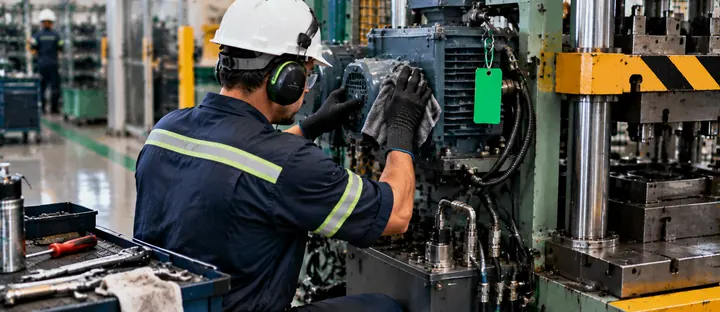
Lean is strong at making the process simple. It teaches you to see waste, organize the flow, and involve the people who do the work. It is cheap, quick to start, and builds the discipline that any later system requires.
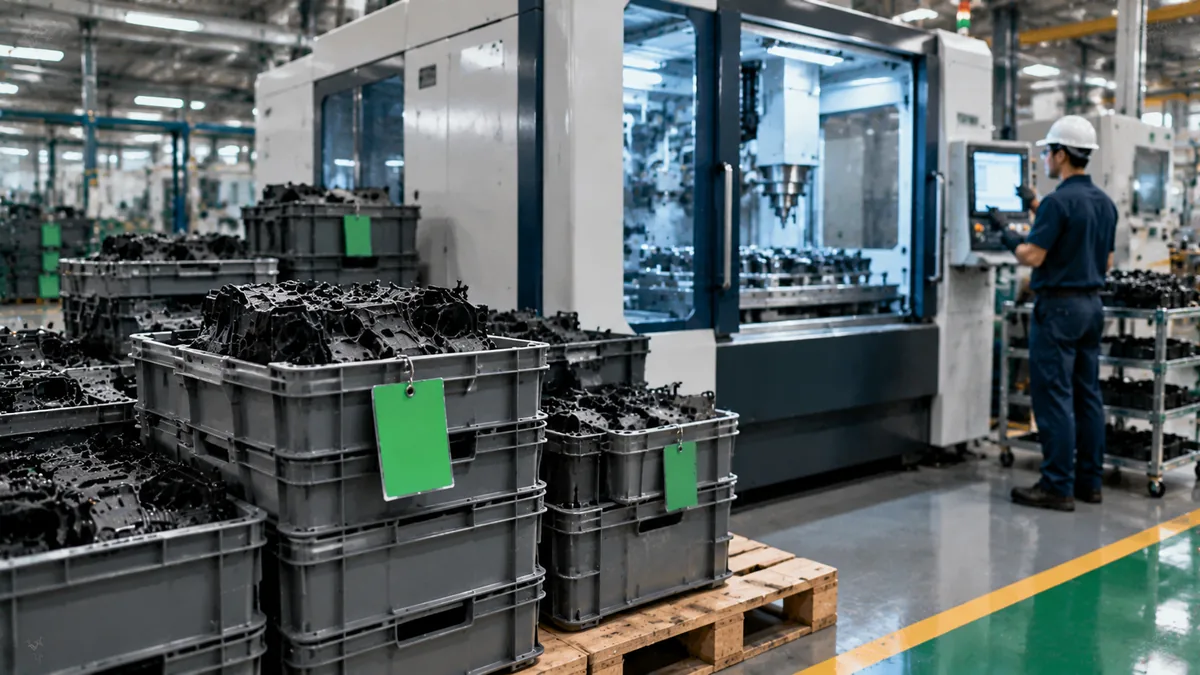
Illustrative scenario: a machining cell with three machines improves changeover time with SMED, organizes the workstation with 5S, and standardizes the method. The gain is quick and cheap. What remains, such as short, unpredictable stops on one of the machines, now requires automatic recording to be understood. That is where technology comes in, with a clear objective.
Its limit appears in complex operations, with many variants and a large volume of events: collecting data by hand becomes slow, and the problem reaches the manager's attention too late.
What Industry 4.0 delivers best
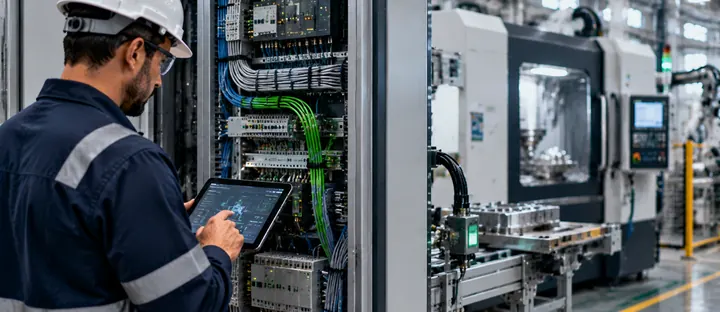
Industry 4.0 is strong at observation at scale. Sensors record every stop, every parameter variation, every lot. Analytics detect patterns that a human observer does not notice and anticipate failures. This reinforces practices such as TPM and statistical process control.
Data analysis also expands the reach of continuous improvement. With a reliable history, the team tests hypotheses, compares shifts, and evaluates the effect of each change with more rigor, which strengthens the PDCA cycle.
Its limit is the opposite: without an understanding of the process, data becomes noise. Technology shows what is happening, but it does not say what is value or what should be eliminated.
Where the two complement each other
- Visual management: the physical board and the digital dashboard show the same indicator in different places. See visual management.
- Standardization: standardized work defines the method, and the sensor confirms whether it is being followed.
- Problem solving: data points to where to look, and root cause analysis, such as the 5 Whys, explains why.
- Flexibility: SMED reduces changeover, and digital scheduling chooses the best sequence.
- Built-in quality: jidoka detects the deviation, and the sensor records and traces it.
Which comes first
To decide, use three questions in sequence. First: is the process stable and standardized? If not, start with Lean. Second: is the main waste already known and eliminable without technology? If so, eliminate it. Third: is there still a lack of visibility or responsiveness that only technology offers? If so, choose the minimum solution.
In most cases, the safest order is to go lean and stabilize, then digitalize what remains. Those who reverse the order tend to buy systems to manage complexity that could have been eliminated. The rule is not always rigid: in high-variety, high-risk processes, sensors can help understand the problem before any improvement. Even so, the purpose of each purchase should be tied to an identified waste. The adoption roadmap is in 5 steps to adopt Industry 4.0.
And Industry 5.0 in this conversation
There is also a cultural point. Lean requires leaders to go to the workplace and talk to people. Digitalization can pull the leader away from the floor, because information starts arriving on a screen. The attentive leader uses the dashboard to choose where to go, not to stop going.
The more recent vision puts people and sustainability back at the center, which brings the two currents closer again. For that discussion, see Industry 5.0 vs Industry 4.0 and what 5.0 changes for Lean.
Next step
Take your biggest-loss indicator and answer three questions. Is the process standardized? Can we measure the loss without excessive manual effort? Is the cause known? If the answer is no to the first two, start with Lean. If the problem is measuring at scale or anticipating failures, evaluate the technology. In both cases, keep the Lean foundation as the reference for value.
Frequently asked questions
Are Lean and Industry 4.0 competitors?
No. Lean defines what to improve and why. Industry 4.0 offers ways to measure, connect, and sustain improvement faster.
What should come first?
In general, go lean and stabilize the process, then digitalize what remains. That way technology does not amplify waste.
Is Lean 4.0 an official method?
No. It is an informal term for the combination of Lean principles and digital technologies.
Does Industry 4.0 eliminate the need for visual management?
No. Digital dashboards and physical boards coexist. What matters is that the indicator is seen and acted upon.
Do small companies need Industry 4.0?
Not necessarily. Many get a large gain from Lean alone. Technology comes in when the problem requires measurement or scale that the manual method cannot reach.
Keep studying
Sources
- WOMACK, J.; JONES, D. A Mentalidade Enxuta nas Empresas. Rio de Janeiro: Elsevier.
- Lean Enterprise Institute. Lean thinking and practice (glossário Lean). https://www.lean.org/lexicon-terms/lean-thinking-and-practice/
- Lean Enterprise Institute. Jidoka (glossário Lean). https://www.lean.org/lexicon-terms/jidoka/
- OHNO, T. O Sistema Toyota de Produção: além da produção em larga escala. Porto Alegre: Bookman.
Keep studying: trusted sources and links
- Lean Enterprise Institute: What is Lean?
- Plattform Industrie 4.0
- Wikipedia: Lean manufacturing
- Wikipedia: Fourth Industrial Revolution
Save this address: Manufatura Enxuta is your school for lean manufacturing. Come back whenever you need to study, with a complete article, a visual map and trusted sources. Follow one of the learning paths or check the A–Z glossary.
Want a quick reference guide for the factory floor?
Download the free Pocket Guide e-book with the Lean tools summarized on one page each.
Download the e-book
About the author
Lean Manufacturing & Behavioral Management Specialist
Over 20 years in the automotive and metalworking industries (GM and Dana), Lean Manufacturing practitioner since 2006. SENAI instructor and mentor in Brazil’s Brasil Mais Produtivo program, delivering consulting, training and audits for 50+ companies, combining quality, productivity and people development.